What are acne scars?

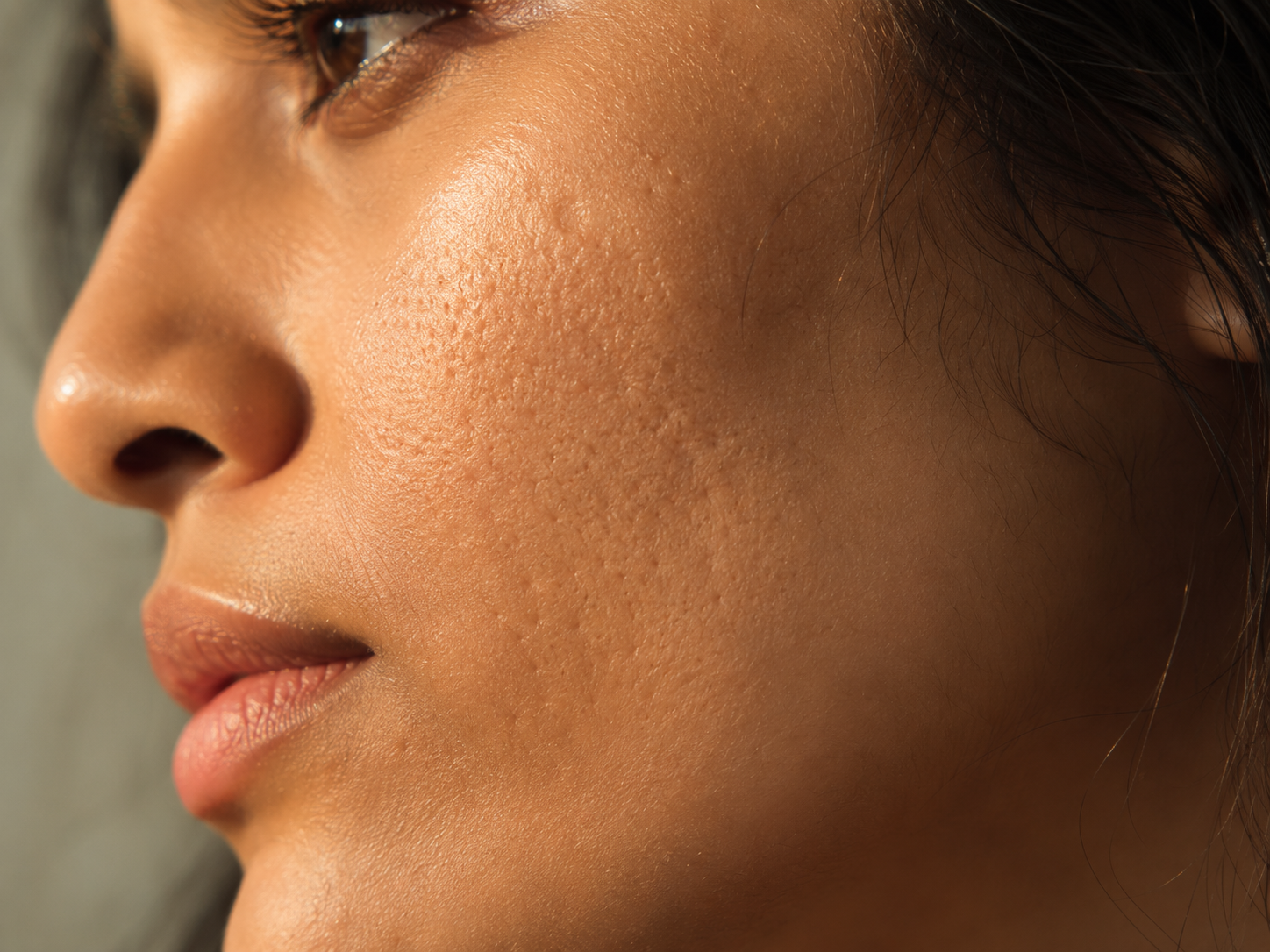
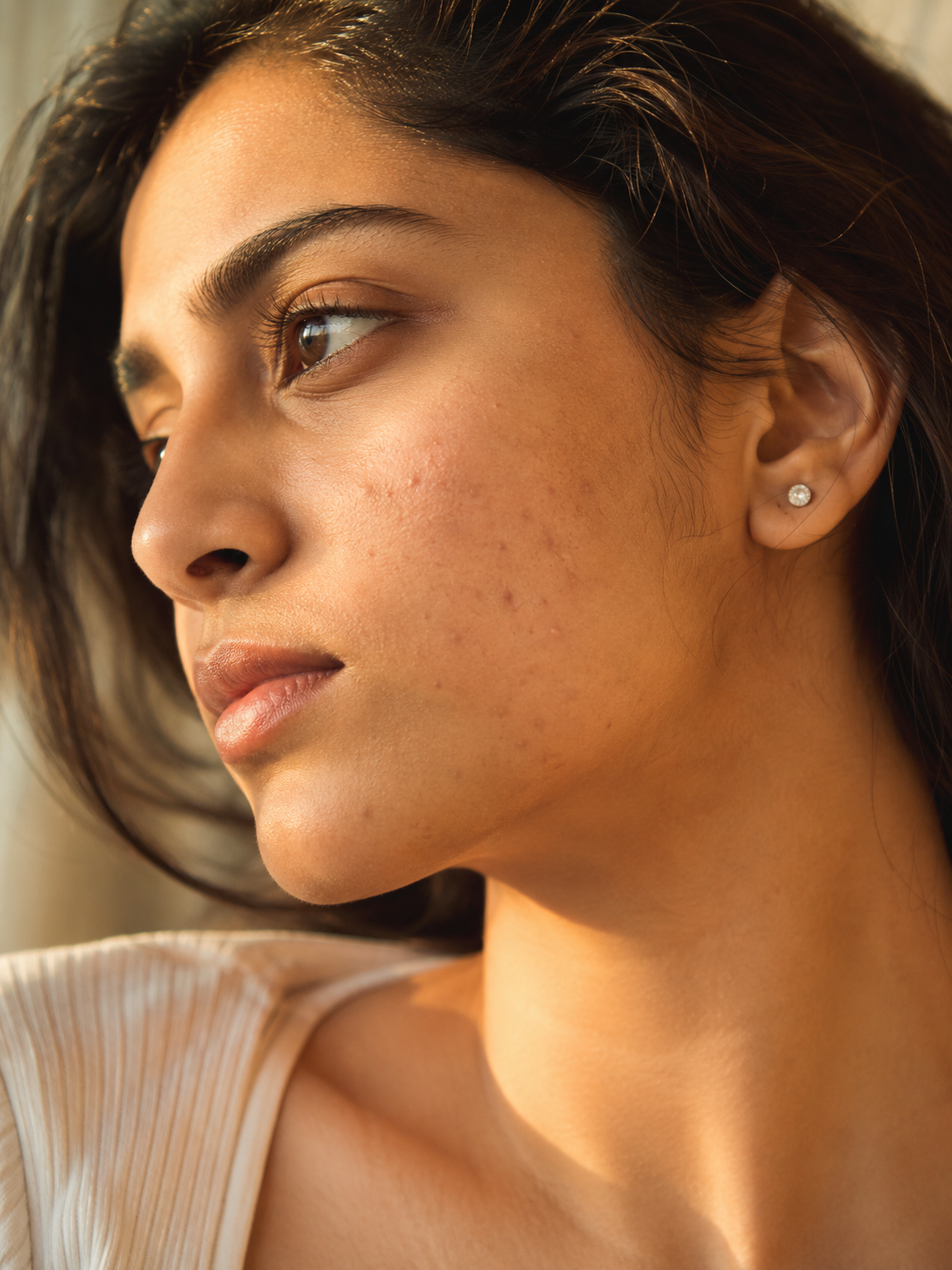
Acne scars are marks left on the skin after acne lesions heal. They can vary widely in appearance, from depressed areas where collagen was lost during healing (atrophic scars) to raised, firm areas where excess tissue formed (hypertrophic scars). On Indian skin tones, acne breakouts also commonly leave behind post-inflammatory hyperpigmentation (PIH): flat dark marks that are not true scars but are frequently mistaken for them.

True structural scars and PIH are treated differently. Understanding which type you have is the starting point for choosing the right treatment.

Who is this suitable for?

  • Visible scarring from previous or resolved acne, however long ago it occurred
  • Ice pick, rolling, boxcar, or hypertrophic scars
  • Persistent dark marks (PIH) left behind by acne
  • Active acne under control before scar treatment begins

Skin tones we treat

  • All Fitzpatrick skin types I through VI
  • Specialist experience with South Asian skin types IV to VI
  • Protocols adjusted per skin type to minimise PIH risk

What causes acne scars?

Scars occur when the skin is damaged by acne, leading to loss of collagen or excessive tissue formation during healing. Several factors increase the likelihood of scarring.

Cause How It Contributes
Severity of acne Deeper, more inflamed lesions cause more dermal damage
Skin type Indian skin tones (Fitzpatrick IV to VI) are more prone to PIH following any skin inflammation
Delayed treatment The longer active acne goes untreated, the greater the tissue damage
Picking or squeezing Forces bacteria deeper and increases trauma to the follicle wall
Improper treatment Using harsh or unsuitable products on active acne can worsen inflammation and increase scarring risk

Finding the right treatment
for your scar type

Most patients present with more than one scar type. The table below maps each type to the treatment used at Skinmatics. Treatment plans are combination protocols, not single-procedure approaches.

Scar Type Appearance Skinmatics Treatment
Ice Pick Deep, narrow V-shaped channels penetrating into the dermis TCA CROSS
Rolling Broad, shallow depressions with sloping edges giving the skin a wave-like texture Subcision
Boxcar Well-defined edges, flat base, U-shaped in cross-section Fractional CO2 Laser, MNRF
Hypertrophic Raised, firm scar tissue within the original wound boundary Intralesional corticosteroid injection, laser resurfacing
Post-Inflammatory Hyperpigmentation Flat dark marks, not true scars but often mistaken for them Chemical peels, topical agents, gold toning laser

What we offer at Skinmatics

Each treatment below is available across our clinics in Bengaluru and Chennai. Your dermatologist recommends one or a combination based on your scar assessment.

01
Subcision
A fine needle is inserted beneath the skin to release the fibrous tissue that tethers rolling scars to the underlying tissue. Once these bands are released, the overlying skin lifts naturally, improving the wave-like texture typical of rolling scars. Local anaesthesia is applied beforehand.
Minor Procedure
02
Fractional CO2 Laser
A resurfacing treatment that promotes collagen production by creating controlled micro-wounds in the skin, stimulating the body's natural healing response. Particularly effective for boxcar and rolling scars. A numbing cream is applied beforehand, and most patients require multiple sessions spaced 4 to 6 weeks apart.
Laser Resurfacing
03
MNRF (Microneedling Radiofrequency)
Combines microneedling with radiofrequency energy delivered into the dermis to stimulate deep collagen remodelling. Because the energy is delivered below the skin surface, MNRF carries a lower risk of post-treatment pigmentation than ablative lasers, making it well suited to Indian skin tones.
Microneedling RF
04
TCA CROSS
A precise chemical technique used specifically for ice pick scars. High-concentration trichloroacetic acid is applied directly inside individual scar channels, triggering collagen production that causes the channel to fill and contract from the inside out. Each session takes 15 to 30 minutes.
Chemical Technique

Before, during,
and after your treatment

What happens before your treatment
  • Consultation to evaluate your skin condition, scar types, and overall skin health
  • Discussion of your medical history and any previous treatments
  • Avoid blood-thinning medications such as aspirin for at least one week before certain procedures
  • Limit sun exposure beforehand and discontinue retinoids or exfoliating products as advised
  • A patch test may be conducted before your first session
What happens during your treatment
  • All procedures use local anaesthesia or numbing cream applied beforehand
  • Subcision releases fibrous bands under rolling scars using a fine needle, around 30 minutes
  • CO2 laser creates micro-wounds in a controlled pattern, 30 to 60 minutes
  • MNRF delivers microneedles and radiofrequency energy in passes, 30 to 90 minutes
  • TCA CROSS applies precisely to individual scar channels, 15 to 30 minutes
What happens after your treatment
  • Recovery varies by procedure, see the table below
  • Sun protection with SPF 30 or higher is mandatory throughout the treatment course
  • Avoid harsh or active skincare products until the skin has fully recovered
  • Keep skin hydrated with a gentle moisturiser
  • Follow-up appointment scheduled to assess progress

Recovery and session duration
by procedure

Session duration

TreatmentSession Duration
SubcisionApproximately 30 minutes
Fractional CO2 Laser30 to 60 minutes
MNRF30 to 90 minutes
TCA CROSS15 to 30 minutes

Recovery / downtime

TreatmentRecovery / Downtime
SubcisionSwelling and bruising for approximately one week
Fractional CO2 LaserRedness and peeling for approximately one week
MNRFMild redness for 2 to 3 days
TCA CROSSRedness and peeling at treated sites for several days

Dermatologists who know Indian skin.

Skinmatics has treated over 10,000 patients across 5 clinics in Bengaluru and Chennai. Treatment plans are customised to each patient's scar type and skin tone, with particular experience in treating Indian skin tones where the risk of post-treatment hyperpigmentation requires careful procedure selection and calibration.
  • MBBS, MD-qualified dermatologist at every clinic
  • Specialist experience with Fitzpatrick types IV to VI
  • Treatment plans customised to your scar type and skin tone
  • Personalised plans reviewed and signed off by your doctor
  • Honest assessments at every consultation, no guaranteed outcome claims
5
Clinics across Bengaluru and Chennai
10K+
Patients treated since founding
7
MBBS, MD-qualified dermatologists
USFDA
Cleared technologies in every clinic

Available at all five clinics

Acne scar treatment is available at all Skinmatics locations in Bengaluru and Chennai. Book at your nearest clinic or call us to confirm availability at a specific branch.

Questions about acne scar treatment

What are acne scars?
Acne scars are marks left on the skin after acne lesions heal. They vary in appearance depending on how the skin healed. Atrophic scars are depressed areas where collagen was lost during healing, and include ice pick, rolling, and boxcar subtypes. Hypertrophic scars are raised, firm areas where excess tissue formed. Post-inflammatory hyperpigmentation, the flat dark marks left after acne resolves, is not a true scar but is frequently treated alongside structural scarring.
What causes acne scars?
Scars form when acne damages the dermis, the deeper layer of skin responsible for producing collagen. Severe or untreated acne, particularly cystic and nodular lesions, causes the most significant dermal damage. Picking or squeezing lesions, delayed treatment, darker skin tones, and genetic predisposition all increase the likelihood of scarring. The best way to prevent new scars is to treat active acne promptly and avoid manipulating lesions.
Can acne scars be treated?
Yes. Skinmatics offers several effective treatments for acne scars including Subcision for rolling scars, Fractional CO2 Laser and MNRF for boxcar and rolling scars, and TCA CROSS for ice pick scars. The degree of improvement achievable depends on the scar type, depth, and severity. Most patients see significant improvement over a course of treatment, though complete removal of deep structural scars is not guaranteed.
How do I know which treatment is right for me?
The right treatment depends on your scar type. Ice pick scars respond best to TCA CROSS. Rolling scars are treated with Subcision. Boxcar and rolling scars respond well to Fractional CO2 Laser or MNRF. Most patients have a combination of scar types and benefit from a combination treatment protocol. A clinical consultation with a Skinmatics dermatologist is the only way to assess your scar types accurately and design the appropriate plan.
Are acne scar treatments painful?
Most treatments use local anaesthesia or numbing cream applied 30 to 60 minutes before the procedure, which significantly reduces discomfort. During treatment, patients may experience mild pressure, heat, or brief stinging depending on the procedure. Subcision involves pressure and mild stinging at treatment sites. TCA CROSS causes brief stinging at each application site. CO2 laser and MNRF involve heat sensations during energy delivery. Post-procedure discomfort is generally mild and manageable with standard aftercare.
How long does each treatment session take?
Session durations vary by procedure: Subcision takes approximately 30 minutes, Fractional CO2 Laser takes 30 to 60 minutes, MNRF takes 30 to 90 minutes, and TCA CROSS takes 15 to 30 minutes.
How many sessions will I need?
The number of sessions depends on the scar types present, their severity, and the treatment protocol recommended. Most patients require multiple sessions for optimal results. Fractional CO2 Laser and MNRF are typically performed in 3 to 6 sessions spaced 4 to 6 weeks apart. TCA CROSS for ice pick scars may require 4 to 8 sessions. A realistic treatment plan is outlined at your initial consultation.
What is the recovery time for acne scar treatments?
Recovery varies by procedure. Subcision typically involves swelling and bruising for approximately one week. Fractional CO2 Laser causes redness and peeling for about one week, with most patients returning to normal activities within 7 to 10 days. MNRF involves mild redness for 2 to 3 days. TCA CROSS causes localised redness and peeling at treated sites for several days. Sun protection is mandatory throughout the treatment course.
Are there any side effects?
Possible side effects include redness, swelling, and mild discomfort following treatment, all of which are expected and resolve within the recovery timeframes above. On Indian skin tones, post-inflammatory hyperpigmentation is an additional consideration with ablative treatments such as CO2 laser. At Skinmatics, treatment parameters are calibrated specifically for darker skin tones to minimise this risk. Serious complications are rare when procedures are performed by qualified dermatologists.
How much does acne scar treatment cost?
The cost depends on the procedure or combination of procedures recommended, the number of sessions required, and the area being treated. An accurate cost estimate is provided at your initial consultation once your scar types and severity have been assessed. Booking a consultation is the first step to understanding what your treatment will involve and what it will cost.
Can acne scars be prevented?
The most effective way to minimise scarring risk is to treat active acne promptly, avoid picking or squeezing lesions, and use a good skincare routine with non-comedogenic products. Seeking early treatment for active acne rather than waiting reduces the severity of inflammation and the depth of dermal damage. If active acne is currently your concern, Skinmatics offers acne treatment as a first step before addressing any existing scarring.
How is acne scar treatment different from acne treatment?
Acne treatment targets active breakouts: controlling sebum production, reducing bacteria, clearing clogged pores, and preventing new lesions. Acne scar treatment targets the structural damage left after acne has healed: improving skin texture, stimulating collagen, and addressing depressed or raised scars. Active acne must be brought under control before scar treatment begins, as ongoing breakouts will continue to create new scarring while treatment works on existing ones.
Ready to take the first step?
Book a Consultation Chat on WhatsApp
© 2026 Skinmatics. All rights reserved. Skinmatics Dermatology · Crafted by Arun ↗